The Hagia Sophia Museum,Topkapı Palace and the ruins of Ephesus. These are the most visited tourism attractions in Turkey last year, according to the Culture Ministry’s General Directorate of Cultural Heritage and Museums.
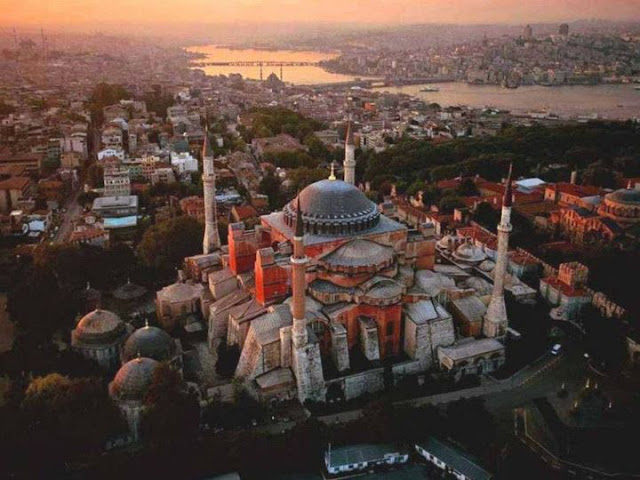
The Hagia Sophia Museum, a 1,475-year-old church that is regarded as one of the most significant architectural structures in Istanbul and in the world, became the most-visited museum in 2012. Hagia Sophia was a former Greek Orthodox patriarchal basilica, later an imperial mosque, and is now a museum in Istanbul, Turkey. The Hagia Sophia served as inspiration for many other Ottoman mosques, such as the Blue Mosque, the Şehzade Mosque, the Süleymaniye Mosque, the Rüstem Pasha Mosque and the Kılıç Ali Paşa Mosque.
Topkapı Palace in Istanbul which was the primary residence of the Ottoman Sultans for approximately 400 years (1465-1856) of their 624-year reign came in second place. Both Topkapı Palace and Hagia Sophia are located in Sultanahmed and within walking distance to each other and infamous Blue Mosque.
Ephesus, an ancient Greek and later a major Roman city on the coast of Ionia was in the third place. The ruins of the city which date back to 6000 B.C. are one of the best preserved ancient city ruins in Turkey and is quite popular thanks to its accessibility.
Meanwhile, the Mevlana Museum in the Central Anatolian province of Konya and the ruins of Hierapolis in the Aegean province of Denizli ranked among the most popular museums and ruins.
In 2011 a grand total of 28,462,893 tourists visited museums and ruins in Turkey, contributing 253,892,756 liras of revenue.
The Hagia Sophia Museum, a 1,475-year-old church that is regarded as one of the most significant architectural structures in Istanbul and in the world, became the most-visited museum in 2012. Hagia Sophia was a former Greek Orthodox patriarchal basilica, later an imperial mosque, and is now a museum in Istanbul, Turkey. The Hagia Sophia served as inspiration for many other Ottoman mosques, such as the Blue Mosque, the Şehzade Mosque, the Süleymaniye Mosque, the Rüstem Pasha Mosque and the Kılıç Ali Paşa Mosque.
Topkapı Palace in Istanbul which was the primary residence of the Ottoman Sultans for approximately 400 years (1465-1856) of their 624-year reign came in second place. Both Topkapı Palace and Hagia Sophia are located in Sultanahmed and within walking distance to each other and infamous Blue Mosque.
Ephesus, an ancient Greek and later a major Roman city on the coast of Ionia was in the third place. The ruins of the city which date back to 6000 B.C. are one of the best preserved ancient city ruins in Turkey and is quite popular thanks to its accessibility.

Meanwhile, the Mevlana Museum in the Central Anatolian province of Konya and the ruins of Hierapolis in the Aegean province of Denizli ranked among the most popular museums and ruins.
In 2011 a grand total of 28,462,893 tourists visited museums and ruins in Turkey, contributing 253,892,756 liras of revenue.

